Explore engineering insights, technology trends, immersive experiences, AI innovation, cloud infrastructure, and modern digital systems.
Custom Software. Built Around the Business.
What if your business software worked exactly the way your team works?
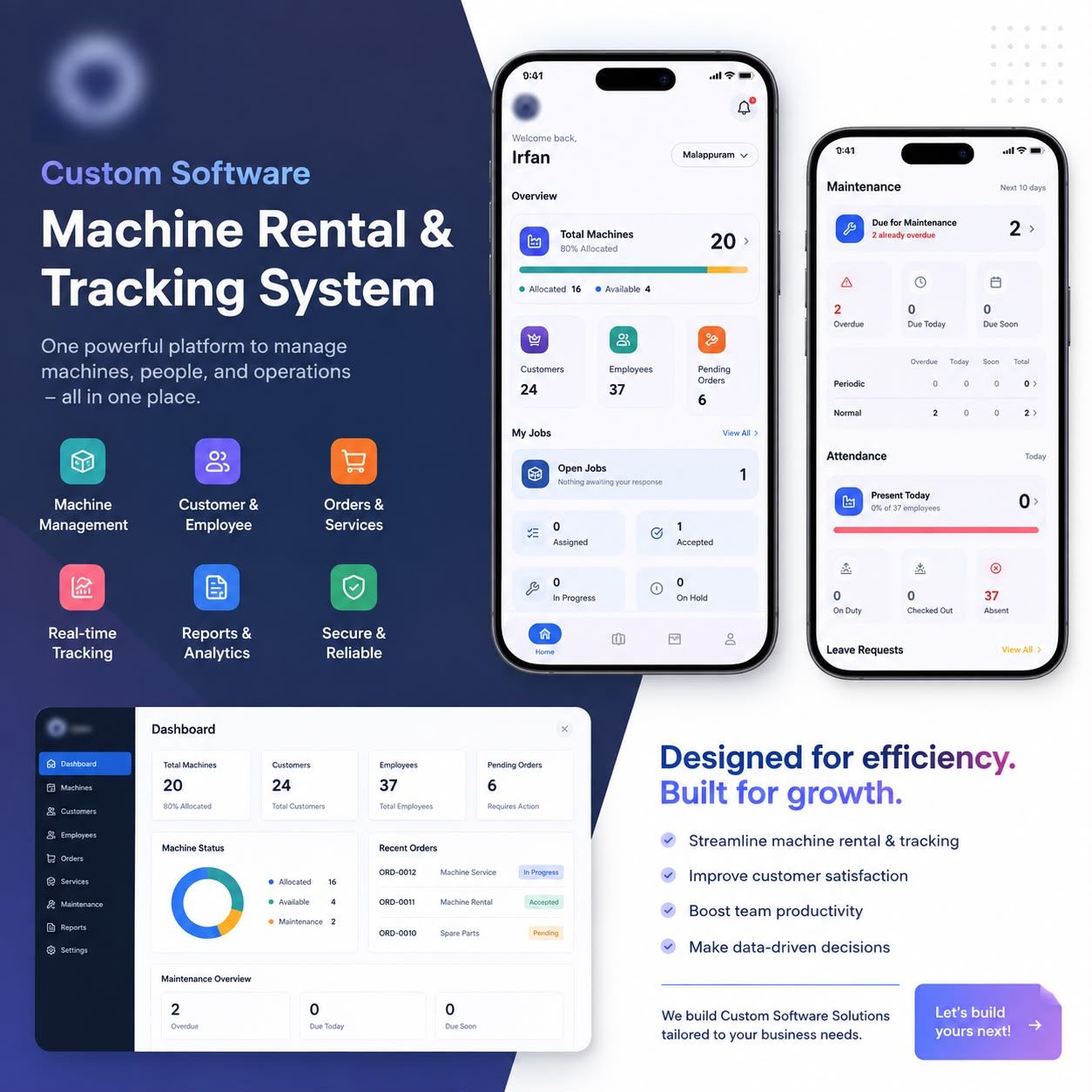
We recently developed a custom machine management and tracking solution designed to bring multiple business operations into one connected platform.
The system brings together:
🔹 Machine Management — Track machines, allocation, availability and status
🔹 Machine Tracking — Get better visibility across operations
🔹 Maintenance Management — Monitor upcoming and overdue maintenance
🔹 Customer Management — Centralize customer information and activities
🔹 Employee Management — Manage employees, attendance and workforce activities
🔹 Job Management — Track assigned, accepted, ongoing and completed jobs
🔹 Service Requests — Create and assign service requirements
🔹 Purchase Orders — Manage purchase-related workflows
🔹 Reports & Analytics — Turn operational data into actionable insights
🔹 Web + Mobile Access — Connect business operations across platforms
The goal wasn’t to fit the business into an existing software package.
The software was built around the business.
That’s the real advantage of custom software.
Every company has different workflows, approval processes, reporting requirements and operational challenges. Instead of changing your processes to fit generic software, you can build a solution that fits your processes.
At Rubicod Technologies, we build custom web and mobile applications for businesses that need more than an off-the-shelf solution.
Whether you need a machine tracking system, ERP, CRM, workforce management platform, inventory solution, service management system, or a completely custom business application, we can build it around your requirements.

test test test
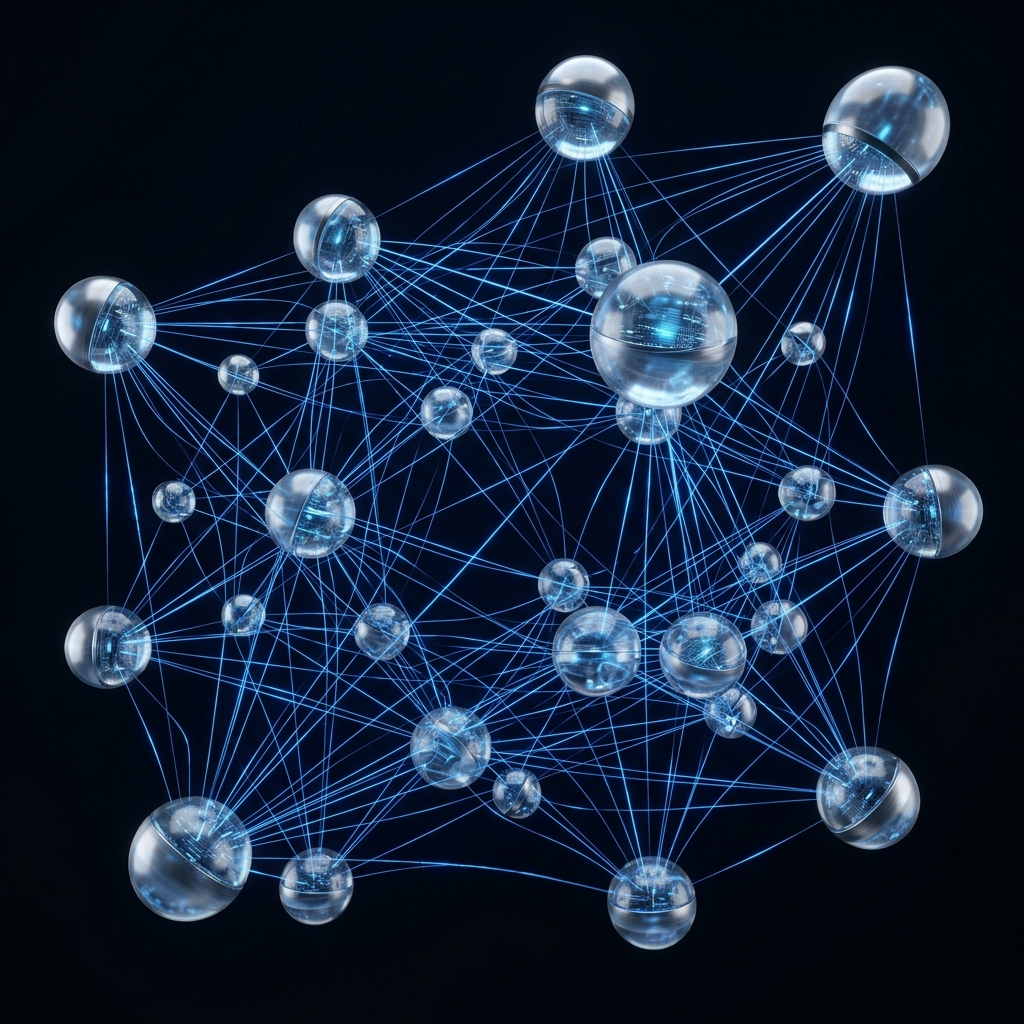
Standard LLM interactions are bottlenecked by text inputs and standard chat layouts. The future of AI interaction is spatial, organic, and contextual. Rather than forcing users to type instructions, interfaces must anticipate user needs and adapt layout structures dynamically.
We design custom neuromorphic layouts that alter grid priorities based on model confidence scoring. As an operator inputs parameters, a background inference engine predicts the next logical workflow stage, rendering relevant tools and folding away secondary parameters.
This dynamic canvas utilizes physics-based layouts to animate transitions. By easing scale adjustments and translating container boundaries smoothly, the interface guides the operator's eye naturally, eliminating cognitive overload and speeding up execution times.
Get engineering breakdowns, system architectures, and UI/UX design token methodologies sent to your inbox once a month. No spam.
